When Canadian actor Ryan Reynolds shared how CPR training helped him save his nephew's life, he wrote on Instagram in 2017:
“
I ended up saving my nephew's life because I knew what to do!
His story raises an important question. Would we know what to do if someone near us needed help?
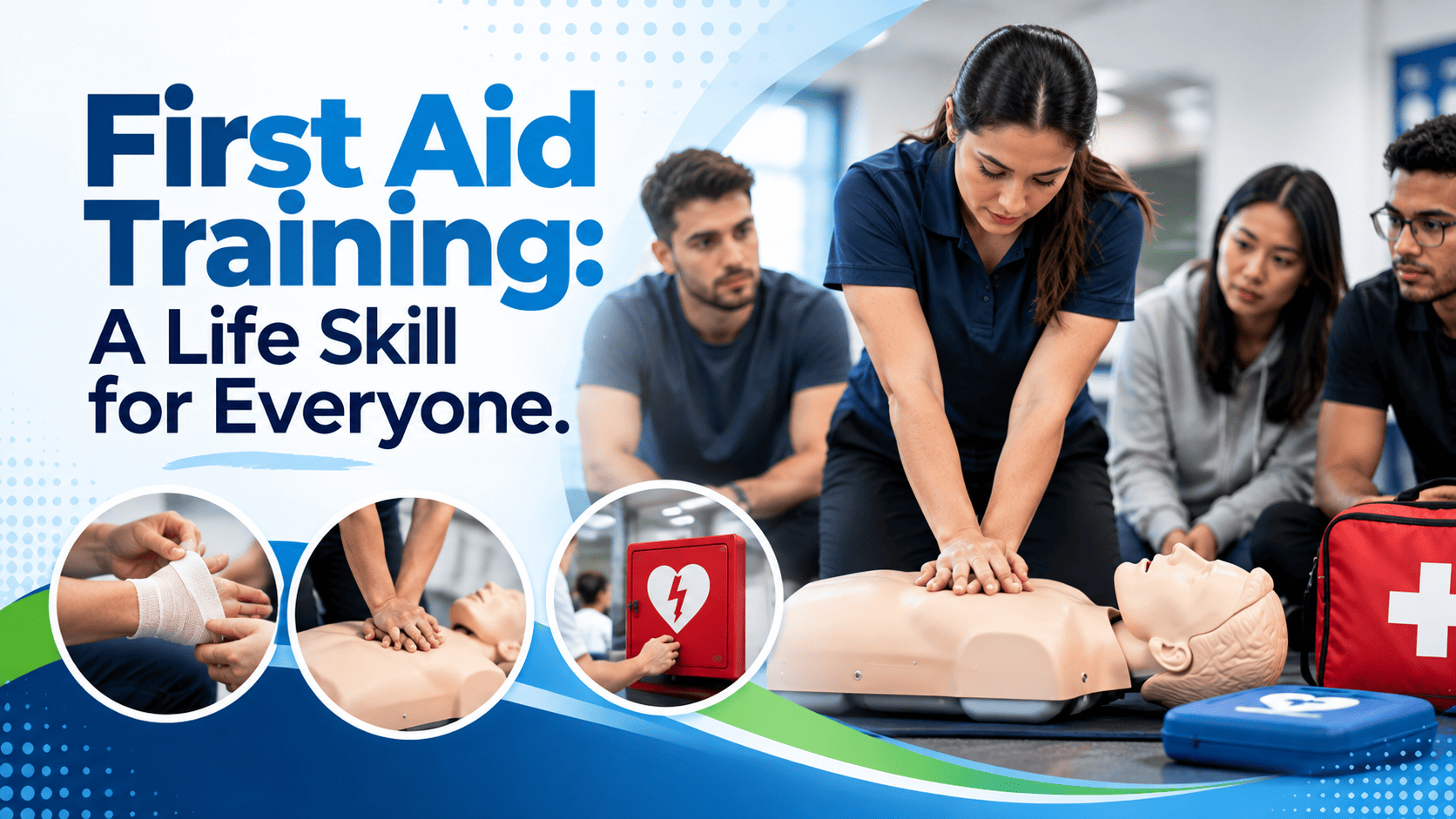
First aid is a life skill for everyone. A parent may need to help a choking child. A small business owner may see a customer collapse. An office worker may face a medical emergency at work. A student may see a friend faint. A sports coach may need to help an injured player. A tradesperson may need to help a coworker with a serious cut or burn.
These are unexpected events where ordinary people may be the first to help.
First aid is a critical bridge between an emergency and professional medical care. Doctors, nurses, and paramedics provide expert treatment. However, it takes time for them to arrive. During those first few minutes, basic first aid skills can help keep someone alive.
In a July 2021 article published by the University of Toronto about the importance of
people helping in emergencies, Canadian emergency doctor and researcher Dr. Aaron
Orkin made an important point:
His words remind us that every person can have a role in saving lives.
The need in Canada is serious. About 60,000 cardiac arrests happen outside hospitals each year. A cardiac arrest means the heart suddenly stops. Fewer than one in ten people survive. About 80% of these events happen at home. Early CPR and the use of an AED, a device that can help restore a normal heart rhythm, can greatly improve the chance of survival.
These numbers show why Canada needs more people trained in first aid.
“
The most important healthcare provider might just be everybody.
The need in Canada is serious. About 60,000 cardiac arrests happen outside hospitals each year. A cardiac arrest means the heart suddenly stops. Fewer than one in ten people survive. About 80% of these events happen at home. Early CPR and the use of an AED, a device that can help restore a normal heart rhythm, can greatly improve the chance of survival.
These numbers show why Canada needs more people trained in first aid.
First aid education should reach more families, schools, small businesses, offices,
sports clubs, and workplaces. More people should learn these skills, practise them, and
keep them up to date.
At Noble First Aid, we believe every person should have the knowledge and confidence to help in an emergency.
At Noble First Aid, we believe every person should have the knowledge and confidence to help in an emergency.
An ordinary person with basic first aid skills can make an extraordinary difference when every second matters.
www.noblefirstaid.com
Jagdeep Kailey
Program Director