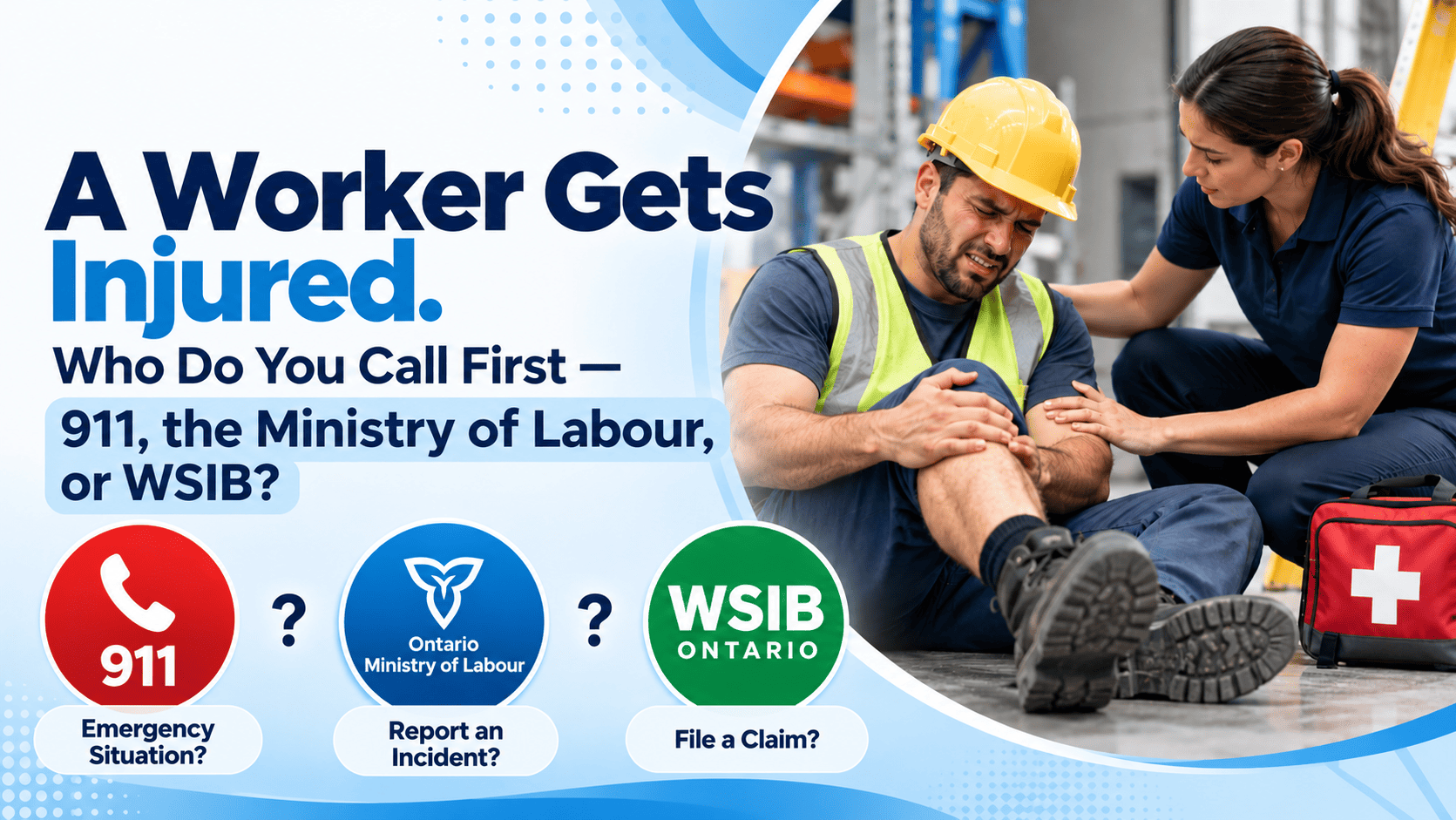
A Worker Gets Injured. Who Do You Call First — 911, the Ministry of Labour, or WSIB?

A worker falls from a ladder and cannot stand. What should happen next? In Ontario, help the injured person first. Then make the reports the law requires.

First, Get Help
If there is a medical emergency, call 911 right away. Do not wait for the manager. Anyone at the scene can make the call. A trained first aider should give safe care until emergency workers arrive. Keep the area safe. Record the care given.
Next, Inform the Right People
If someone dies or has a critical injury at work, the employer must tell Ontario's Ministry of Labour right away. A critical injury is very serious. It may include loss of consciousness or a broken arm or leg.
Call the Ministry at 1-877-202-0008. The employer must also tell the workplace health and safety committee or representative, and the union, if there is one. A written report is due within 48 hours. At construction sites, the company in charge of the project must also report.
If an injury needs medical attention or stops a person from doing their usual work, the employer must normally send written notice to the safety committee or representative and union, if any, within four days. The Ministry needs that notice only if an inspector asks for it.
If only first aid was needed, with no missed work, lost pay or modified duties lasting over seven days, no WSIB report is usually needed.

Protect People and the Business

After a critical injury, keep the accident area as it is, unless changes are needed to help someone or prevent more danger.
Failing to report can lead to penalties. For offences under Ontario's workplace safety law, a company can face fines of up to $2 million.
A clear emergency plan makes business sense. Train staff in first aid. Name people to make the required reports. Check emergency numbers and practice the plan.
Quick action may save a life, reduce lost work time and show employees that their safety matters.

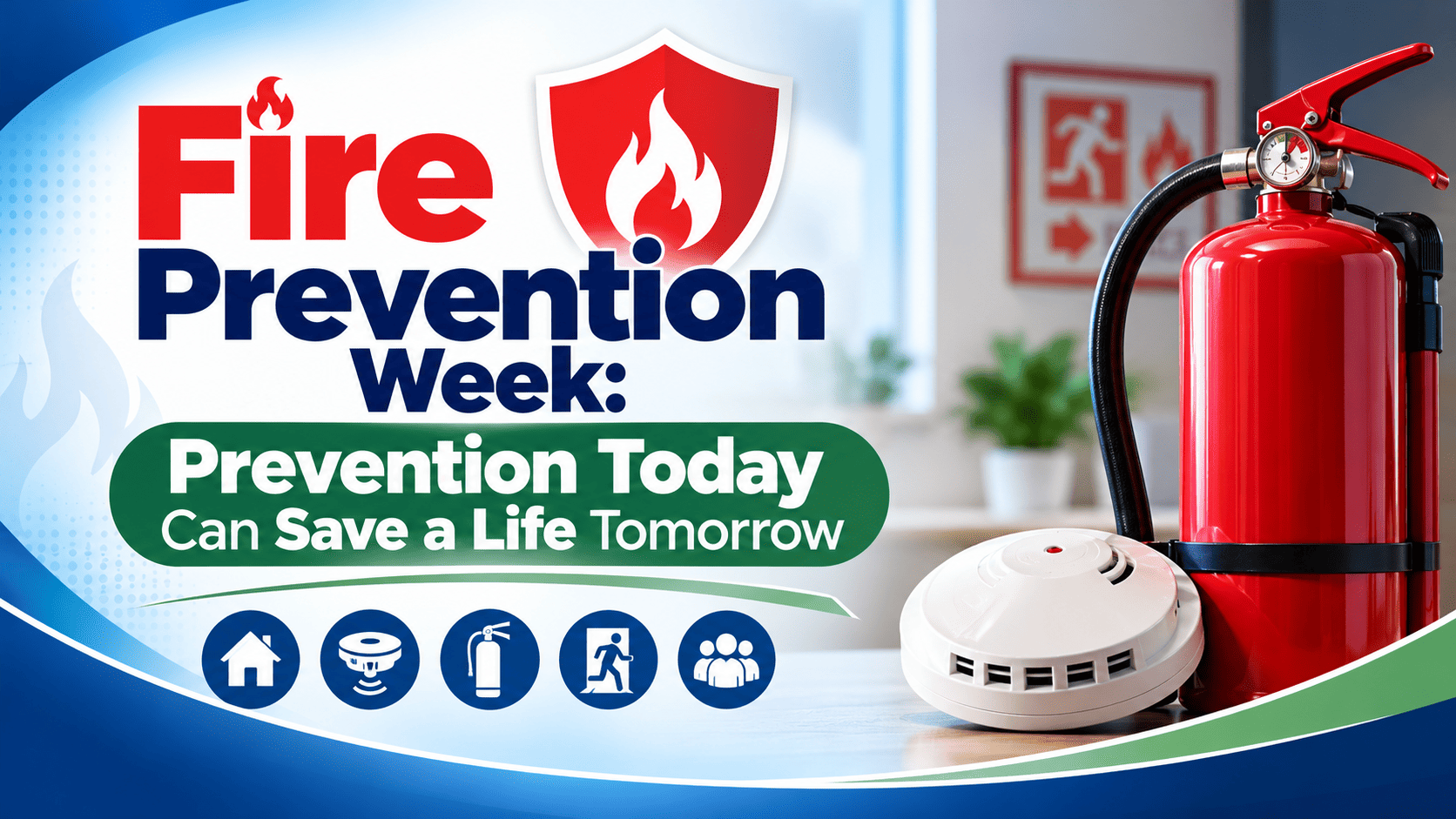
Fire Prevention Week: Prevention Today Can Save a Life Tomorrow

Fire Prevention Week is observed every year during the week that includes October 9. Its history goes back to the Great Chicago Fire of 1871, one of the most destructive fires in North American history. The National Fire Protection Association has sponsored Fire Prevention Week since 1922, and Canada first recognized it in 1923.
In 2026, Fire Prevention Week runs from October 4 to 10. This year also brings special attention to the safe use and charging of lithium-ion battery-powered devices.
Safety First
“
Fire safety begins before the alarm sounds.
Preparedness today. Protection tomorrow.
For families, fire prevention starts with simple habits. Keep working smoke and carbon monoxide alarms, make and practise a home escape plan, stay alert while cooking, use candles and heating equipment carefully, and keep matches and lighters away from children.
Rechargeable batteries also need care. Phones, laptops, power tools, e-bikes and other devices should be charged with proper equipment and on safe surfaces. Damaged, swollen or overheating batteries should be taken seriously.
Employers, businesses and institutions should regularly review fire safety plans, keep exits and escape routes clear, conduct emergency drills, maintain fire protection equipment, and make sure staff know what to do during an emergency. First aid supplies and AEDs should also be easy to find.
“
A safe workplace is one where people know how to prevent an emergency and how to respond when one happens.
Statistics Canada reported about 220 fire-related deaths per year from 2011 to 2020, with most unintentional deaths occurring in residential fires. National fire data also shows cooking as a major cause of residential fires and fire injuries. Smoking materials, electrical problems, heating equipment and open flames are other important hazards.
If a fire occurs, get out, stay out and call 911 from a safe location. Give the exact address and follow instructions from emergency services. Fire emergencies can cause burns, smoke inhalation, breathing problems, shock and cardiac arrest. First Aid and CPR training can help people recognize an emergency, give immediate care, perform CPR and use an AED when needed while professional help is on the way.
“
Prevention protects. Training prepares. Quick action can save a life.
Fire Prevention Week is a reminder for every family, workplace and community to prepare before an emergency happens.
Noble First Aid

WSIB-Approved First Aid Training Provider in Ontario

Website: noblefirstaid.com

Phone: 437-435-1645

Email: contact@noblefirstaid.com

Article Author

Jagdeep Kailey

Program Director

Sources: National Fire Protection Association, Statistics Canada, and Heart & Stroke Canada.

Welcome to Noble First Aid & CPR Training

At Noble Education Group, we have long held a deep commitment to health and community safety. Our founder and CEO, Vishu Mehta, brings a strong background in medical education. With this foundation, establishing a health and safety training initiative was a primary goal from the beginning. Launching this First Aid and CPR program marks a crucial step in fulfilling that vision.
Noble has received valuable guidance from Dr. Imran Qureshi. He brings extensive experience as a healthcare trainer and emergency instructor. His technical direction gave us the solid base needed to build a trusted, high-standard learning initiative.

WSIB-Approved First Aid Training in Ontario

As a WSIB-approved training provider in Ontario, Noble First Aid is authorized to deliver the following training programs:

  • ✓ Basic First Aid and CPR Level C with AED
  • ✓ Intermediate First Aid and CPR Level C with AED, including recertification
  • ✓ Stand-alone CPR and AED Training
We genuinely place high value on human life and physical well-being. Frontline personnel are the true backbone of Ontario's communities. Everyday heroes work tirelessly to protect others—including healthcare and senior care staff, childcare providers, security guards, and industrial workers.

Over a century ago, Robert Baden-Powell captured a principle that remains central to modern emergency preparedness:

“Be prepared for accidents by learning beforehand what you ought to do.”

— Robert Baden-Powell
This mindset directly drives our mission today. We look forward to supporting individuals, local businesses, and regional organizations across the province. By providing top-tier instructional standards at competitive rates, we make essential safety skills accessible to everyone. Together, we can build safer workplaces and stronger communities.

Jagdeep Kailey

Program Director
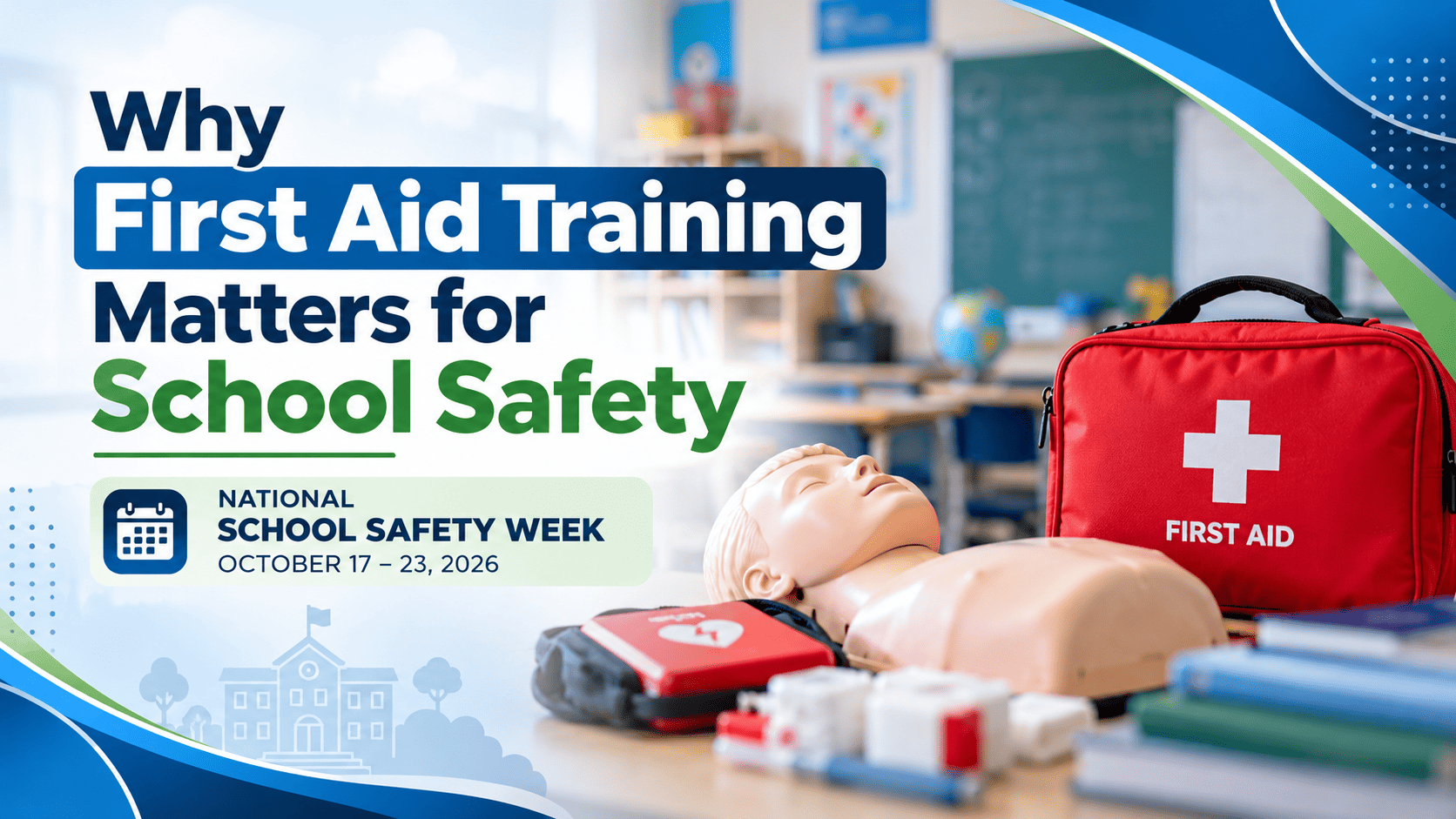
Why First Aid Training Matters for School Safety

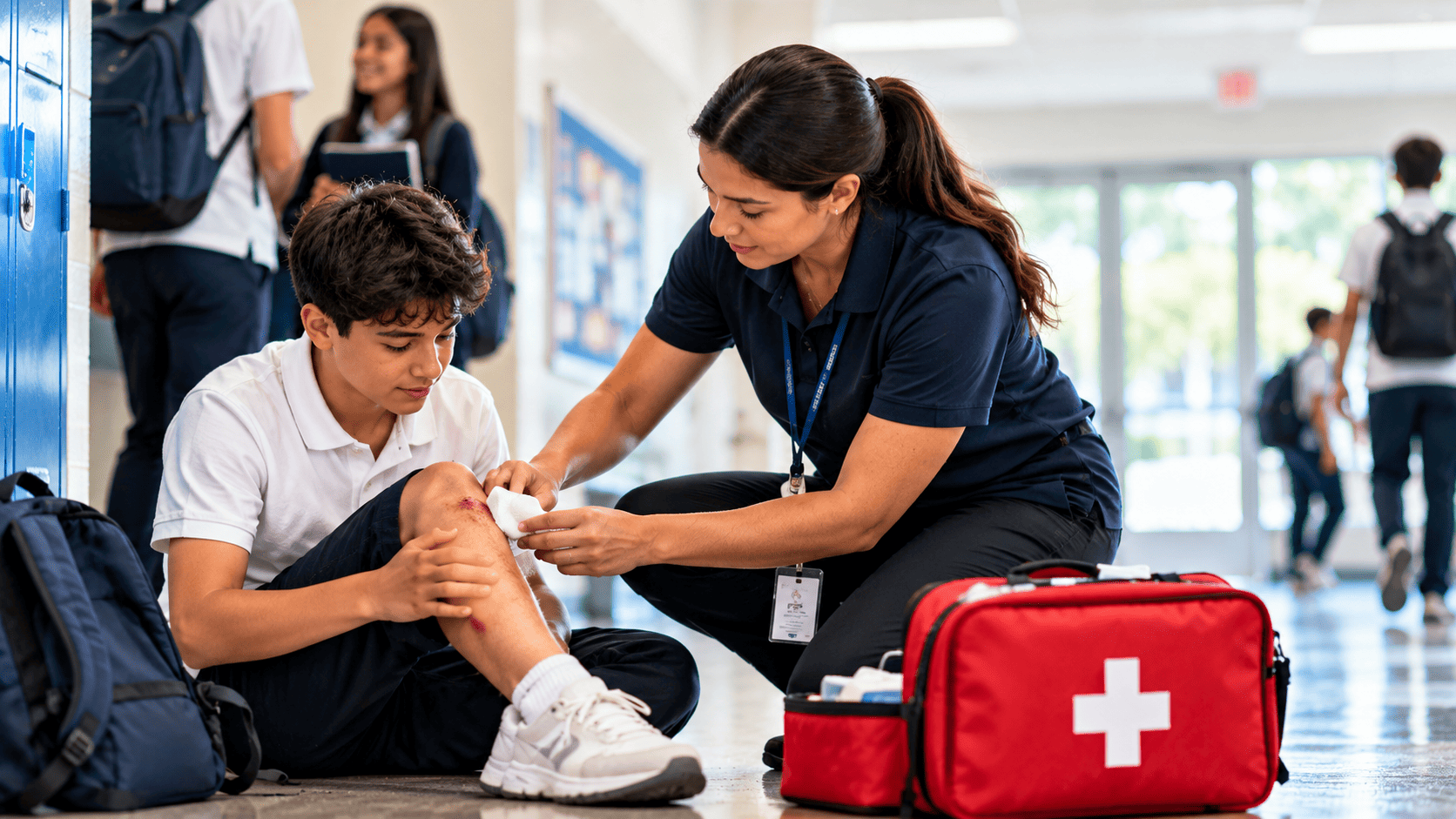
School Hallway First Aid Support

October 17–23, 2026 is National School Safety Week

Every child should feel safe at school and on the way there. National School Safety Week, October 17 to 23, reminds us that safety is not only the job of a school. Teachers, students, parents, and drivers all have a part to play. Safety starts with care. It grows when people know what to do in an emergency.
Most school days are safe. Yet accidents can happen at any time. A child may fall on the playground, choke while eating, have trouble breathing, or get hurt in a game. A student may faint or have a bad allergic reaction. In these moments, a calm person with first aid skills can help until medical care arrives.
Teachers and school staff care for many children each day. They may be the first adults to see a student in trouble. First aid and CPR training can help them spot danger, call 911, and give the right help. Some staff roles require first aid certificates. Even when they do not, the skills are useful. Schools should check who is trained, keep first aid supplies ready, and practise their emergency plans.
Students also have a role. Older students can learn how to get help, what to say to 911, and how to act safely. Some high school programs in Ontario require first aid and CPR certificates. These include some programs in sports, health, and child care. For other students, training is still a good life skill. More schools could offer it. It may also help with future jobs or volunteer work.
Safety does not end at the school gate. Many parents drive their own children and children from other families to school, games, or trips. A road crash or sudden illness can happen during a ride. These parents should think about taking first aid and CPR training. They should also use the right car seats or seat belts and follow road rules.
We have seen painful news about school shootings in the United States. We hope no school here ever faces such an event. Still, we must take all threats seriously. Schools need clear safety plans and trained people. In a violent event, the first step is to get to safety, follow school instructions, and call 911 when safe. First aid can help the hurt once it is safe to act.
As the saying goes, “Hope for the best, but prepare for the worst.” At Noble First Aid, we believe training gives people useful skills and more confidence. This National School Safety Week, let us make safety a daily habit. We cannot stop every emergency, but we can be better prepared to help.

#SchoolSafetyCanada #FirstAidTrainingCanada #CPRTrainingCanada #StudentSafety #EmergencyPreparedness #FirstAidEducation #CanadianSchools #NobleFirstAid

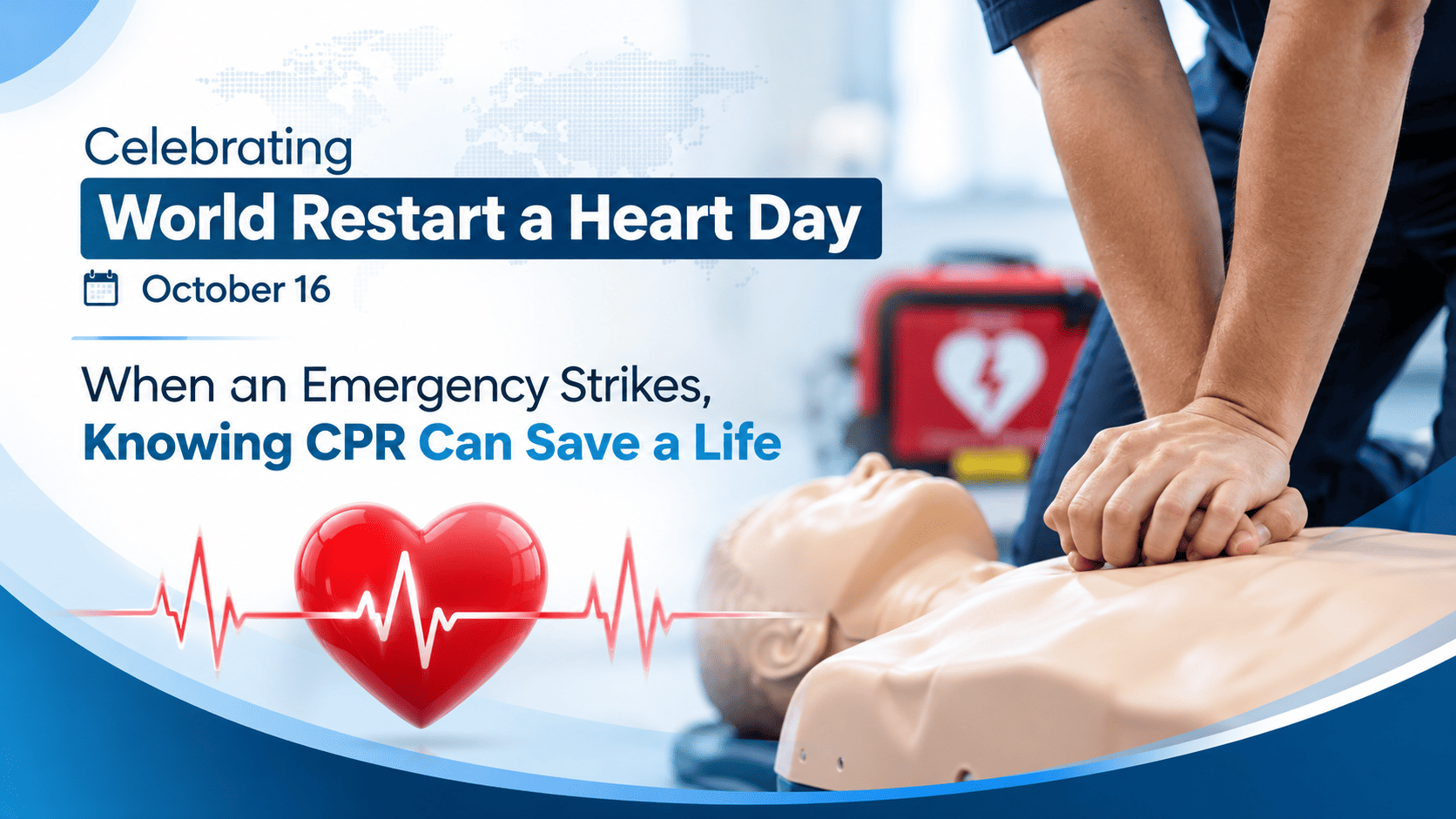
Celebrating World Restart a Heart Day

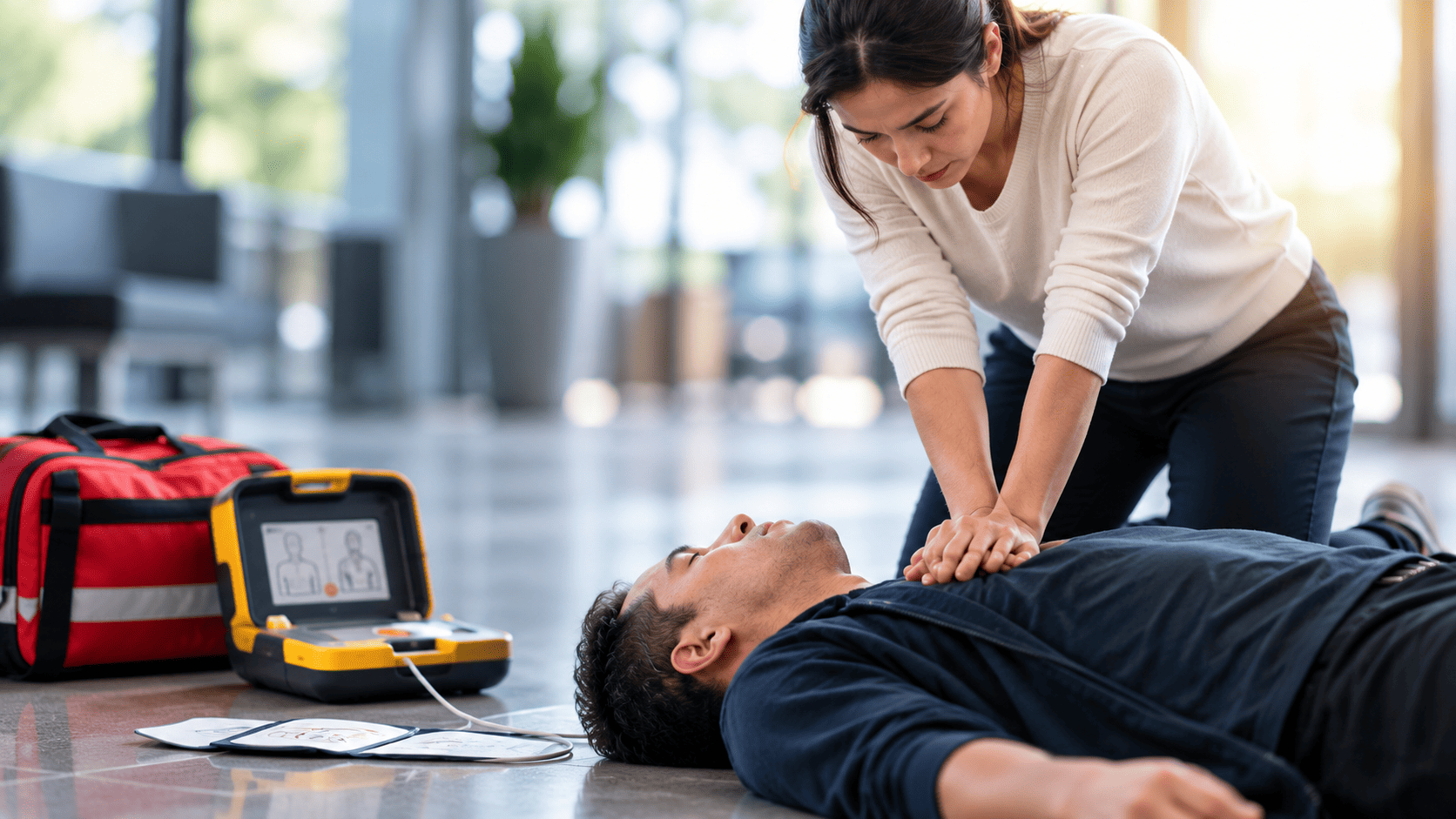
Urgent CPR in a Modern Lobby

When an Emergency Strikes, Knowing CPR Can Save a Life

Last year, during a family gathering, a close friend who is also a doctor suffered a heart attack. Most people were worried and unsure how to respond. Thankfully, first responders helped him reach the hospital within minutes.
The experience left me with a question:
If a similar emergency happened in front of us today, would we know what to do?
A heart attack can sometimes lead to cardiac arrest, when the heart suddenly stops beating. Immediate CPR can help keep someone alive until medical help arrives.

World Restart a Heart Day, observed every October 16, reminds us why this matters.

How World Restart a Heart Day Began

The European Resuscitation Council (ERC) started Restart a Heart Day in 2013. In 2018, the International Liaison Committee on Resuscitation (ILCOR) expanded it into a worldwide campaign. By God's grace, he received help quickly.
The goal was simple: encourage more people to learn CPR and help save lives during cardiac emergencies.
Today, it brings together healthcare workers, training organizations, schools and communities worldwide.

Why Does This Matter in Canada?

According to the Heart & Stroke Foundation of Canada:

  • About 60,000 cardiac arrests happen outside hospitals in Canada each year.
  • Only 1 in 10 people survives an out-of-hospital cardiac arrest.
  • Performing CPR and using an automated external defibrillator (AED) can double a person's chance of survival.

These numbers show why it is important to act quickly.

If someone becomes unresponsive and is not breathing normally, call 911, begin CPR, and use an AED as soon as one is available.

The Role of First Aid Training in Ontario

In Ontario, WSIB-approved first aid training providers help workers and community members learn emergency skills.
Through practical training, people learn how to recognize emergencies, perform CPR and use an AED.
This training prepares people to respond at work, home and in public places throughout the year.

Our Commitment at Noble First Aid

At Noble First Aid, we believe that CPR is a skill everyone should learn.
As a WSIB-approved first aid training provider, we help individuals, families and workplaces build the knowledge and confidence to respond during emergencies.
My friend's experience reminded me how suddenly a medical emergency can happen.

We may never know when someone will need our help. Learning CPR today could help us save a life tomorrow.
This World Restart a Heart Day, we encourage everyone to take one important step: Learn CPR and be prepared to help. Noble First Aid can help you get trained.

Sources and References

#WorldRestartAHeartDay #CPRSavesLives #NobleFirstAid #Mississauga #FirstAidTraining #WSIB #CardiacArrestAwareness